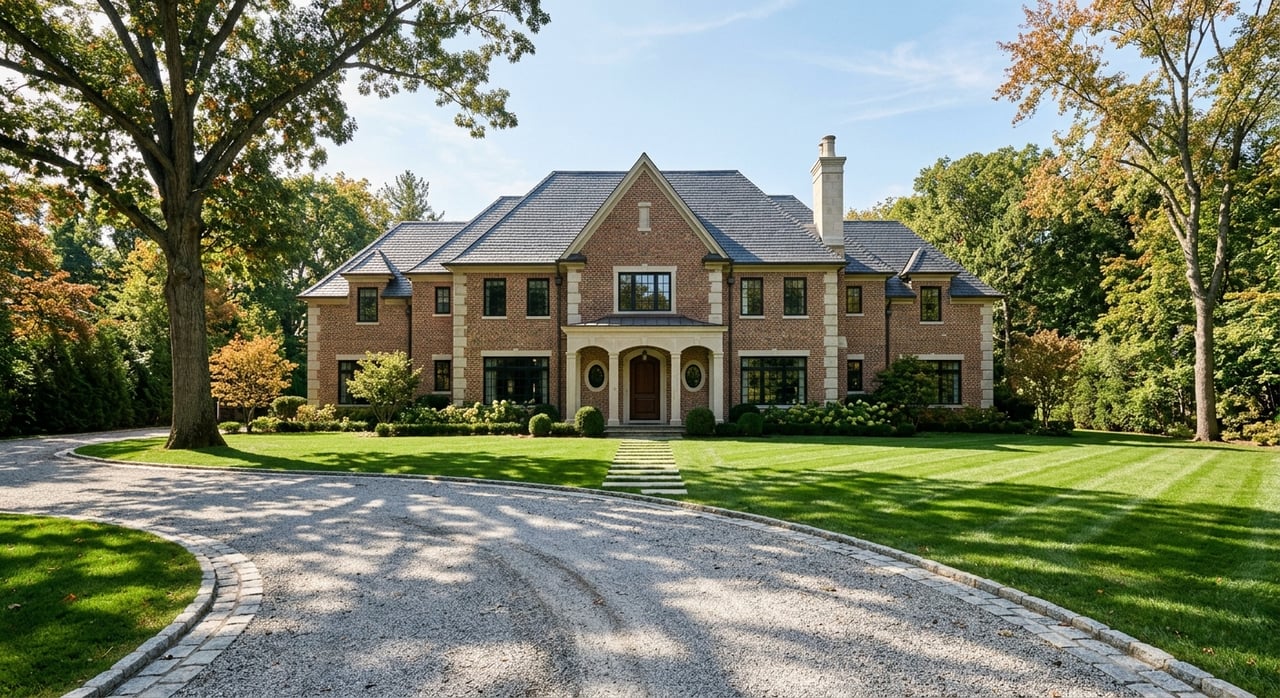
If you are looking at Indian Hill, you are not shopping a typical suburban market. You are stepping into a place where land, privacy, zoning, and custom property details can matter just as much as square footage or finishes. Whether you plan to buy or sell, understanding how this market works can help you make smarter moves and set better expectations. Let’s dive in.
What makes Indian Hill a luxury market?
Indian Hill stands apart because its housing values and land-use pattern point to a true estate market. According to U.S. Census QuickFacts for the Village of Indian Hill, the median value of owner-occupied homes was $1,192,800 in the 2020-2024 period, and median household income was $234,821.
That level is notably higher than nearby communities. Census data for Montgomery shows a median owner-occupied home value of $545,100, which helps show how Indian Hill operates in a different pricing and land-use category than many other upscale suburbs in the area.
In practical terms, luxury in Indian Hill is often tied to more than the house itself. Buyers are often evaluating acreage, privacy, setting, and long-term use potential along with architecture, condition, and layout.
How zoning shapes the market
One of the biggest reasons Indian Hill feels different is its zoning structure. The village’s zoning ordinance requires 5-acre minimum lots and 250 feet of frontage in District A, while District B requires 3-acre minimum lots and 200 feet of frontage.
The same ordinance also limits lot coverage to 20% and caps principal structure height at 40 feet. Those rules affect what can be built, how homes sit on the land, and why the area keeps its spacious, low-density character.
There is some nuance within the code. The ordinance also includes another dwelling standard with 1-acre lots, 150 feet of frontage, and 75-foot front and rear yards, so not every residential property follows the same pattern.
Even so, the broader identity of Indian Hill is still driven by its larger-lot districts. That is a big reason many homes feel more private, more spread out, and more estate-oriented than you may find in other high-end communities.
Why lot size matters
In Indian Hill, lot size is not just a bonus feature. It is often a core part of value.
A larger parcel can influence how a property is used, how it is marketed, and how many buyers it attracts. It can also shape maintenance expectations, future planning options, and the overall timeline to sell.
Equestrian and legacy property appeal
Indian Hill has a long-standing estate identity, and the zoning code helps preserve it. The ordinance specifically defines agricultural use in a way that includes horse boarding farms and stables as accessory uses connected to residential or agricultural property.
That helps explain why some properties appeal to buyers looking for land, barns, or a more legacy-style estate setting. These are not features you find in most suburban luxury markets, and they can make pricing and buyer demand more specialized.
What counts as luxury in Indian Hill?
Based on the current active luxury set referenced in the research, luxury inventory in Indian Hill centers around a $2.25 million median listing price. Current examples range from about $1.7 million to nearly $6 million, showing a wide spread based on acreage, age, condition, and special property features.
That range matters if you are trying to benchmark value. In Indian Hill, a newer custom build on a smaller parcel may compete in a very different lane than a larger legacy estate with extensive acreage or equestrian amenities.
This also means you should be careful about making quick comparisons. In a market with limited inventory and highly individualized properties, pricing is rarely one-size-fits-all.
Why pricing can swing month to month
Indian Hill is a small market, so monthly numbers can move around more than they would in a larger suburb. The research report notes that one recent monthly snapshot reflected just 3 homes sold, which is too small a sample to treat as a long-term trend.
That is why context matters. A few estate sales, a unique custom home, or a thin month of inventory can shift averages quickly.
For buyers and sellers, the takeaway is simple: focus more on comparable property type, lot profile, and overall positioning than on a single headline number from one month.
How fast do luxury homes sell?
Luxury homes in Indian Hill do sell, but timing can vary. Research cited in the report indicates a typical pace of roughly 41 to 50 days on market, while some recent sales moved much faster or much slower depending on the property and pricing strategy.
That range is important. One recent example sold in 25 days, while other more specialized or higher-priced properties reportedly took 198 days and 245 days.
That kind of spread is common in luxury real estate. Realtor.com’s luxury outlook reports that million-dollar-plus homes nationally spent about 75 days on market in early 2025, and ultraluxury homes often take longer because the buyer pool is smaller and negotiations are more complex.
Why some homes take longer
A longer timeline does not always mean something is wrong with the property. In Indian Hill, longer market times can reflect:
- Larger parcels that appeal to a narrower buyer pool
- Legacy homes with older improvements
- Highly customized layouts or design choices
- Pricing that reaches beyond the most active demand band
- Special-use features that require the right buyer match
For sellers, that means strategy matters more than assumption. For buyers, it means patience can create opportunity on homes that need a more specific fit.
What buyers should know before making a move
If you are buying in Indian Hill, it helps to look beyond finishes and staging. You also want to understand what the land allows, what the site demands, and what future changes may require.
The village’s Planning and Zoning Department notes that the Planning Commission serves as the review and approval board for subdivisions, variances, and special exceptions. Zoning changes also go through public hearing and Council review.
That means if you are considering a custom build, renovation, lot split, or other significant change, the process may be more involved than you expect. Site planning, setbacks, massing, and approval paths can matter just as much as your design ideas.
A few buyer checks worth making
Before you move forward on a property, consider confirming:
- The zoning district and minimum lot standards
- Setback, frontage, and lot coverage requirements
- Whether your renovation or build plans may need variance review
- Whether any special-use features affect ongoing upkeep or approvals
- How the property’s acreage and layout compare with recent relevant sales
Another practical note: the zoning ordinance prohibits short-term rentals of fewer than 30 consecutive days. If you were thinking about part-time use with short-term income flexibility, that rule should be part of your decision-making.
What sellers should prepare for
Luxury buyers tend to do heavy screening online before they ever book a showing. According to the National Association of Realtors 2024 buyer and seller highlights, 43% of buyers started by searching online, 51% found the home they purchased through an online search, and the median search lasted 10 weeks.
That same report shows buyers still rely heavily on representation, with 86% using an agent during the search process and 88% buying through an agent or broker. For sellers, this reinforces the value of a strong listing strategy backed by experienced guidance.
Presentation is also central. NAR reports that listing photos are the most useful online feature for 81% of buyers, while detailed property information and floor plans are also highly valued.
What strong Indian Hill marketing should highlight
In a market like Indian Hill, your listing has to communicate more than bedroom count and surface updates. It should quickly show buyers the full picture of what makes the property distinct.
That often includes:
- Acreage and how the land is laid out
- Privacy and approach to the home
- Renovation quality and overall condition
- Floor plan flow and room function
- Outdoor living or equestrian features
- Any custom elements that support the home’s value
A polished launch matters because luxury buyers often narrow the field online first. If the photos, property details, and positioning are not clear from the start, you may lose qualified interest before the first private showing is ever scheduled.
Why local guidance matters in Indian Hill
Indian Hill is not a plug-and-play market. Low inventory, larger parcels, zoning complexity, and highly customized homes all make local interpretation important.
That is where process and presentation can make a real difference. A team that understands how to evaluate acreage, position a unique property, and coordinate a polished listing launch can help reduce friction and improve decision-making on both sides of the transaction.
If you are thinking about buying or selling in Indian Hill, working with a team that values clear communication, responsive service, and strong marketing can help you move forward with more confidence. When you are ready to talk through your options, connect with Close to Home Consultants.
FAQs
What defines a luxury home in Indian Hill?
- In Indian Hill, current luxury inventory centers around a median listing price of about $2.25 million, with active examples ranging from roughly $1.7 million to nearly $6 million depending on the home, land, and special features.
Why is Indian Hill different from other upscale suburbs near Cincinnati?
- Indian Hill stands out because of its much larger lot requirements, low-density zoning structure, and significantly higher housing values, which create a more estate-oriented market.
How long do luxury homes in Indian Hill usually take to sell?
- Market time often falls around 41 to 50 days, but specialized or higher-priced properties can take much longer depending on acreage, customization, and pricing strategy.
What should buyers review before purchasing a luxury home in Indian Hill?
- Buyers should review the property’s zoning district, lot requirements, setbacks, future use limitations, and whether planned renovations or new construction may need Planning Commission review.
What should sellers focus on when marketing a luxury home in Indian Hill?
- Sellers should focus on professional photography, detailed property information, floor plans, pricing strategy, and clear presentation of acreage, privacy, layout, and special property features.