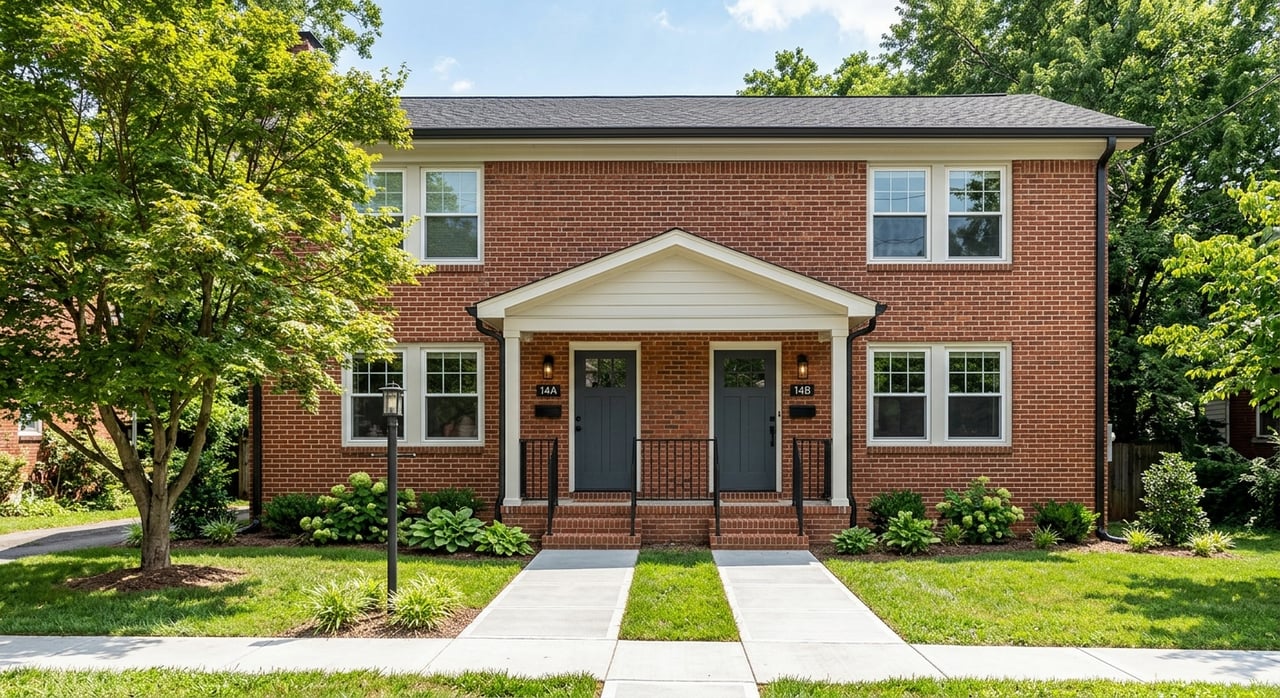
If you have been eyeing Norwood as an investment spot, you are asking the right question. In a market where prices have shifted, rents have climbed, and older housing stock can change the math fast, you need more than hype to decide whether a deal makes sense. The good news is that Norwood still offers a real case for investment if you understand what is driving demand and where the risks show up. Let’s dig in.
Why Norwood still gets attention
Norwood continues to stand out because it offers an inner-ring Cincinnati location with lower entry prices than several nearby areas. Zillow’s home value index put the average Norwood home value at $239,299, while nearby values were higher in places like Oakley at $399,914, Pleasant Ridge at $322,752, and Hyde Park at $577,112. That price gap is a big reason buyers and investors keep circling back to Norwood.
The city also has a practical location story. Norwood’s 2021 Housing Action Plan describes it as a walkable three-square-mile community close to regional job centers. For investors, that supports the idea that convenience and access still matter here, especially for renters looking for an established inner-ring location.
What the sales market says now
The current market does not look distressed, but it does look active. Zillow reported 57 homes for sale, 15 new listings, a median list price of $287,967, and about 49 days to pending. Redfin’s March 2026 data showed a closed-sale median of $317,500, up 38% year over year, with homes taking about 40 days to sell.
These numbers are measuring different things, so they should not be treated as exact matches. Still, together they suggest a market that is moving, somewhat competitive, and not deeply discounted. Redfin also reported homes selling about 2% below list on average, which points to some room for negotiation without signaling a bargain-basement environment.
Why rent demand still matters
Rental demand is one of the strongest reasons Norwood still screens well for investors. Zillow’s rental market summary showed an average rent of $1,495 as of May 5, 2026, up $295 year over year, with 137 rentals available. Apartments.com reported about $1,505 for a two-bedroom apartment, which supports the idea that common two-bedroom product is trading in the mid-$1,400s to low-$1,500s.
At the same time, Census QuickFacts listed Norwood’s median gross rent at $925. That gap matters. While these figures are not directly comparable, it suggests that occupied legacy rents can sit well below today’s asking rents, especially when a unit turns over or has been updated.
Point2Homes adds more context to the renter base. It shows 4,631 renter-occupied units versus 4,007 owner-occupied units, and Census data lists the owner-occupied share at 47.2%. In plain terms, Norwood is a market with a meaningful renter base, which is important if your strategy depends on leasing strength.
Who may rent in Norwood
The renter profile in Norwood supports steady, convenience-driven demand. Point2Homes shows the largest renter age band is 25 to 34, and the median renter move-in year is 2018. That points to a population that is relatively mobile and likely to keep creating turnover opportunities.
Transportation patterns also matter. Point2Homes reports that 53% of renters have one vehicle available and 16% have none. That does not measure demand on its own, but it does support the appeal of a compact, connected location where daily convenience can influence leasing decisions.
Older housing stock changes the investment strategy
Norwood is not a new-build rental market, and that matters a lot when you underwrite a deal. Point2Homes reports that 48% of renter-occupied units were built in 1939 or earlier. Older stock can create opportunity, but it also raises the importance of realistic rehab budgets, permit planning, and ongoing maintenance.
In a market like this, investors often create value through renovation quality, efficient management, and choosing the right block or property type. You are usually not buying a flashy amenity package. You are buying location, layout, and the chance to improve an older asset in a way renters will actually pay for.
What property types work in Norwood
Norwood’s zoning code clearly includes several residential property types. The code contemplates single-family detached, two-family, three-family, four-family, and five-or-more-family dwellings, and it states that uses not listed are prohibited. That means small multifamily is part of the local housing mix, but you still need parcel-level verification before making assumptions.
The city’s building department also requires permits before work begins and enforces the Ohio Building Code, the Residential Code of Ohio, local property-maintenance rules, and Norwood zoning. For investors, that means every project needs a reality check before closing, especially if your plan depends on reconfiguring space, updating systems, or legal use status.
What the numbers can look like
Current listing examples show why Norwood can still be appealing on paper. Zillow’s Norwood duplex and triplex page showed 12 listings, with asking prices ranging roughly from $180,000 to $575,000. Example properties included a single-family home at 2315 Highland Ave with a $188,600 Zestimate and $1,368 rent estimate, a duplex at 2233 Quatman Ave with a $274,900 Zestimate and $1,917 rent estimate, and a duplex at 2217 Jefferson Ave with a $339,400 Zestimate and $1,703 rent estimate.
On a gross basis, those examples screen to about 8.7%, 8.4%, and 6.0% before vacancy, taxes, insurance, repairs, and management. That is the key point. These are gross yield screens, not true cap rates, so the real returns can look very different once you plug in actual operating costs.
Why careful underwriting matters more now
It is easy to look at gross rent estimates and assume every Norwood deal is a winner. That would be a mistake. Arbor’s Q2 2025 Small Multifamily Investment Trends Report said small multifamily cap rates averaged 6.0% in Q1 2025, while CBRE’s 2025 multifamily underwriting surveys placed core multifamily going-in cap rates around 4.73% to 4.75%.
That broader context matters because it shows that Norwood can still offer attractive small-multifamily opportunities, but not with much room for sloppy assumptions. If you overestimate rent, underestimate repairs, or skip zoning and permit checks, the spread can disappear fast.
So, is Norwood still a smart place to invest?
For many buyers, yes, but with conditions. Norwood still looks investable if you want an accessible inner-ring location, you are comfortable with older homes, and you know how to evaluate single-family rentals, duplexes, or small multifamily properties with discipline. The strongest argument is not that Norwood is cheap. It is that the area can still offer a workable spread between acquisition cost and achievable rent.
Where Norwood is weaker is just as important. If you need a turnkey property at a deep discount with very little rehab or leasing risk, this may not be the easiest market. Current prices, rent levels, and tighter underwriting conditions leave less room for error than they did in softer markets.
How to evaluate a Norwood deal
If you are seriously considering an investment in Norwood, focus on the basics before you fall in love with a property.
- Confirm the legal property type and current zoning for that specific parcel.
- Verify whether your renovation plan will require permits or additional approvals.
- Compare realistic market rents, not just the highest asking rents you can find.
- Budget for repairs and maintenance that come with older housing stock.
- Review days on market, list-to-sale trends, and nearby comparable sales.
- Stress-test your numbers with vacancy, insurance, taxes, and management built in.
This is where local guidance can save you money. Once a property passes the basic rent-spread test, the next questions are usually about parcel details, comparable sales, rehab realism, and whether the business plan actually fits the property.
Why local support matters in Norwood
In a market like Norwood, broad headlines only get you so far. The real decision often comes down to details such as block-by-block price differences, whether a duplex use is established and supported, and how much work an older property will really need. Those are the details that can make an average deal workable or turn a promising deal into an expensive lesson.
If you want to invest in Norwood, the smartest move is to pair market data with property-level analysis. That approach gives you a better chance of finding a deal that fits your budget, timeline, and risk tolerance. If you want help reviewing opportunities in Norwood or comparing them to other inner-ring options, connect with Close to Home Consultants.
FAQs
Is Norwood, Ohio a good place to buy an investment property?
- Norwood can be a solid option if you want a lower-entry inner-ring location and are prepared to underwrite older properties carefully, especially single-family homes, duplexes, and small multifamily buildings.
Are Norwood home prices still affordable compared with nearby areas?
- Norwood remains lower in price than several nearby areas in the research report, including Oakley, Pleasant Ridge, and Hyde Park, which helps keep it on investors’ radar.
What are Norwood rents like for investors?
- Recent asking-rent data in the research report suggests many rentals are leasing around the mid-$1,400s to low-$1,500s, though actual occupied rents can vary and may be lower in legacy units.
Can you buy duplexes or small multifamily in Norwood?
- Yes, Norwood’s zoning code contemplates two-family, three-family, four-family, and five-or-more-family dwellings, but each parcel still needs zoning and permit verification.
What is the biggest risk when investing in Norwood real estate?
- One of the biggest risks is underestimating the cost and complexity of older housing stock, including repairs, maintenance, permitting, and realistic rent projections.
How long are homes taking to sell in Norwood right now?
- The research report shows homes taking roughly 40 days to sell according to Redfin and about 49 days to pending according to Zillow, which points to an active but not overheated market.