Wondering where you can find a little more breathing room without moving far from everyday convenience? If you are searching for a home with a bigger yard, more privacy, or space for future plans, Miami Township deserves a closer look. The area offers a mix of suburban access and lower-density living, but buying a home with extra land comes with a few important details to understand. Let’s dive in.
Why Miami Township Appeals to Space-Seeking Buyers
Miami Township sits in the northwest corner of Clermont County along the I-275 business loop. The township describes itself as a largely urban township with a mix of residential, business, and parks development, while also noting its shift from rural countryside to suburban community over time.
That mix is part of the appeal if you want elbow room without feeling isolated. The township reports about 45,000 residents across 33 square miles, or roughly 1,364 people per square mile, which creates a less dense feel than some nearby communities.
For context, Loveland is about twice as dense as Miami Township, and Milford is also denser. That does not automatically mean every home comes with acreage, but it helps explain why buyers often see Miami Township as a practical option for more outdoor space and privacy.
What “Elbow Room” Looks Like Here
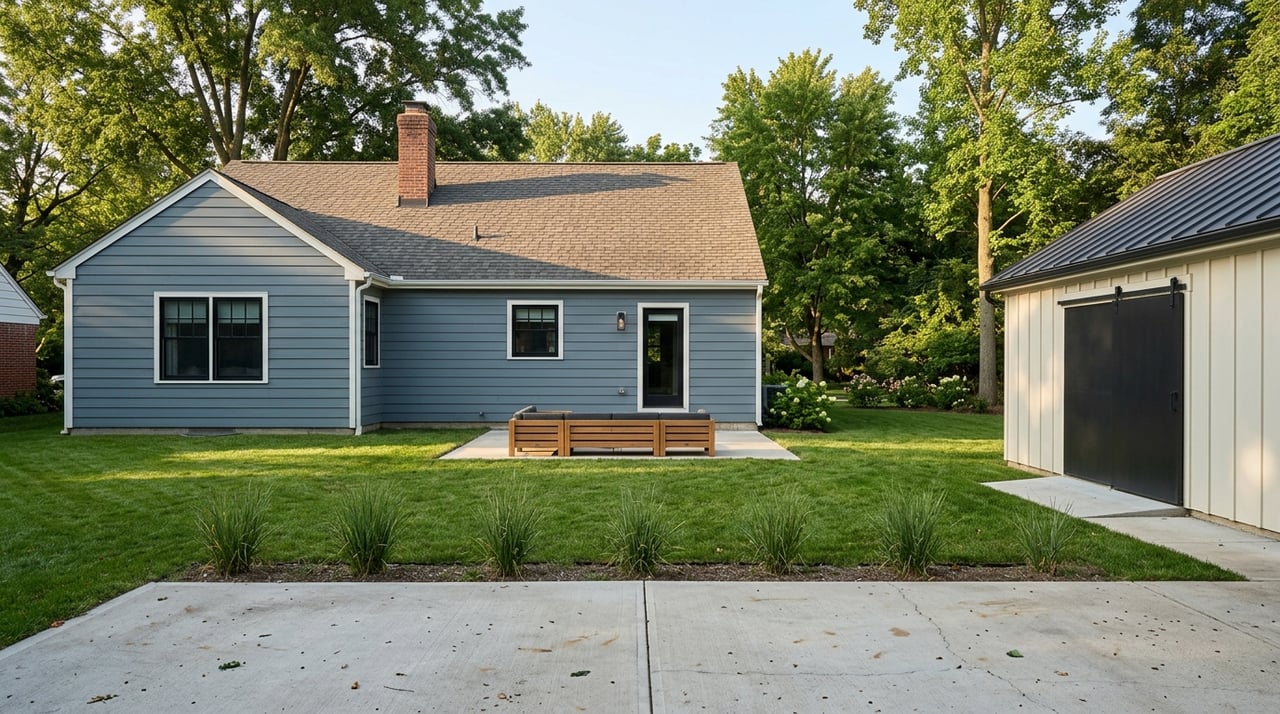
In Miami Township, elbow room can mean a few different things. For one buyer, it may mean a larger backyard and more distance from neighbors. For another, it could mean a parcel with enough room for a garden, extra garage space, or a longer driveway.
The township’s land-use planning shows that low-density housing remains an important part of the area. Its Imagine Miami plan includes Agriculture zoning with a 40,000-square-foot minimum lot area, R-1 with 20,000 square feet, and R-2 with 12,800 square feet, or about 0.30 acres.
Just as important, those categories still account for a meaningful amount of land in the township. The plan lists 258.10 acres in Agriculture, 745.58 acres in R-1, and 672.70 acres in R-2, which signals that larger-lot housing is still part of the local development pattern.
Zoning Matters More Than the Yard Size
A home can look spacious from the road and still have limits on how you use the lot. That is why zoning matters when you are buying for more than just the house itself.
Miami Township’s zoning resolution includes rules for lot area, yard requirements, and screening. If you are thinking ahead to a detached garage, workshop, fence line, or expanded outdoor living area, the parcel’s frontage, shape, setbacks, and district classification all matter.
This is especially important if your goal is to buy a property that can support future improvements. A larger lot does not mean every use is automatically allowed, so it is smart to verify the details before you fall in love with the space.
Larger Lots Often Feel Different
The township’s zoning rules also offer a useful clue about how lot size changes the overall feel of a neighborhood. Sidewalks are generally required on both sides of the street in several residential districts, but there is an exception for large-lot developments of 2 acres or more unless neighborhood amenities are offered.
For buyers, that is a simple way to picture the difference. As lots get larger, the setting can feel less like a standard subdivision and more like a private, spread-out property pattern.
Commuter Access Is Still a Strength
More space does not always mean a harder commute. One reason Miami Township stands out is that it still offers strong road access across the area.
The township says state routes 28, 48, 126, 131, and US 50 run through it. County roads such as Branch Hill Loveland, Branch Hill Guinea Pike, Loveland Miamiville, Paxton, Price, Round Bottom, Ward Corner, Wolfpen Pleasant Hill, and Woodville also help connect different parts of the township.
That network can be a major plus if you want more land but still need practical access to surrounding job centers, shopping, and daily errands. For many buyers, that balance is the whole point.
What the Market Says Right Now
Homes with more privacy and usable outdoor space can attract strong interest, and Miami Township is not a low-pressure market. Redfin reports a median sale price of $400,260 for the three months ending May 2026, with homes selling in a median 38 days.
By comparison, Clermont County overall posted a lower median sale price of $329,013 and a median 43 days on market over the same period. That does not mean every larger-lot home sells at a premium, but it does show that Miami Township can command strong pricing compared with the broader county market.
At the ZIP code level, Zillow lists the average home value in 45111 at $278,963, up 6.2% over the past year. Since that figure is an estimated home value rather than a recent-sale median, it works best as general context rather than a direct apples-to-apples comparison.
Be Ready to Move Quickly
Redfin classifies Miami Township as somewhat competitive. It reports a sale-to-list price around 100%, with 40.6% of homes selling above list price in May 2026.
If you find a property that combines privacy, access, and usable land, you may not have much time to decide. That is especially true when a home checks several boxes at once, like extra acreage, a good layout, and a manageable commute.
Bigger Parcels Bring Bigger Responsibilities
More land can be exciting, but it also means more upkeep. You may be taking on added mowing, drainage management, tree care, longer driveways, and repairs to fences or outbuildings.
Those costs and responsibilities are not necessarily deal-breakers. They just need to be part of your planning, especially if you are moving from a smaller lot or a more typical subdivision setting.
Check Utilities and Sewer Access
If a property does not have access to public sewers, Clermont County’s building FAQ says applicants should contact Clermont County Public Health. This is one of those practical details that can shape renovation plans, additions, or future building ideas.
Before you assume a lot functions like a standard suburban homesite, it is worth confirming how utilities are handled. That extra step can help you avoid expensive surprises later.
Review Floodplain and Drainage Early
If you are considering a rural-style lot or land near lower ground, drainage and floodplain checks should happen early in your search. Clermont County maintains FEMA floodplain maps through Permit Central, and buyers should verify any parcel near rivers, creeks, or low-lying areas before closing.
A property can look great during a showing and still have limitations that affect future use. Checking these maps early helps you understand the land beyond curb appeal.
Know Who Maintains the Road
On larger lots, road access and maintenance matter more than many buyers expect. Miami Township says county roads are handled by the Clermont County Engineer, state routes by ODOT, and all other roads except private drives by the township service department.
That may affect how you think about access, drainage concerns, and future improvements. If the property includes a longer approach or a more rural-style entry, those details become even more important.
Driveway and Frontage Rules Count Too
If you plan to add a new driveway or make frontage improvements, Clermont County says Miami Township reviews and inspects driveway and frontage tile permits on township roads. That is a practical issue for buyers who want extra parking, more privacy, or room for a workshop or similar use.
Fence rules also matter. Clermont County’s building FAQ states that a building permit is required for fences over 6 feet tall.
Smart Questions to Ask Before You Buy
When you tour homes with more land, it helps to go beyond the house itself. A few targeted questions can give you a much clearer picture of how the property will function day to day.
Ask about:
- The exact zoning district and minimum lot requirements
- Setbacks and frontage rules for future improvements
- Sewer access and utility setup
- Floodplain and drainage history
- Road maintenance responsibility
- Driveway permit needs for any planned changes
- Current upkeep needs for trees, fencing, and open yard areas
These questions are especially useful if you are buying with a long-term plan in mind. The right property is not just the one with more land. It is the one whose land works for the way you want to live.
How to Shop for Elbow Room With Confidence
The best approach is to stay clear on your priorities. Some buyers truly want acreage, while others mainly want better separation from neighbors and enough yard to enjoy outdoor living.
That distinction matters because it affects where you focus, what tradeoffs you accept, and how quickly you act when the right listing appears. In a market where well-positioned homes can move fast, having a clear plan helps you make better decisions.
Working with a team that understands Greater Cincinnati area markets, local property patterns, and land-related questions can also make the process smoother. If you are comparing homes in Miami Township with nearby options, local guidance can help you weigh privacy, pricing, commute access, and property usability in a more practical way.
If you are looking for a Miami Township home with room to spread out, the details matter as much as the lot size. The right home can give you more flexibility, privacy, and breathing room, but only if the property fits your goals from both a lifestyle and due diligence standpoint. When you are ready to sort through the options, Close to Home Consultants can help you make sense of the market and move forward with confidence.
FAQs
What does elbow room mean for Miami Township homes?
- In Miami Township, elbow room usually means a larger lot, more separation from neighboring homes, more usable outdoor space, or added flexibility for features like gardens, longer driveways, or detached structures, depending on zoning.
Are there homes with acreage in Miami Township, Ohio?
- Yes, but supply can be limited. Miami Township planning documents show low-density land uses remain present, including Agriculture, R-1, and R-2 areas that support larger-lot development patterns.
Is Miami Township a good option for commuters who want more space?
- It can be, since the township sits along the I-275 business loop and includes several state and county road corridors that help connect residents to surrounding areas.
Do buyers need to check floodplain maps for Miami Township property?
- Yes. Clermont County maintains FEMA floodplain maps through Permit Central, and buyers should review them for parcels near rivers, creeks, or low-lying ground before closing.
Can you add a fence or outbuilding on a larger Miami Township lot?
- Often yes, but the answer depends on the property’s zoning, setbacks, lot dimensions, and permit requirements. Clermont County also states that fences over 6 feet tall require a building permit.
Are Miami Township homes with larger lots more expensive?
- They can be, especially when they combine privacy, access, and usable land. Recent market data shows Miami Township pricing running above the broader Clermont County median, though each property still depends on location, condition, and acreage.